Apps & Tools
Best Perimenopause Apps (2026)
The best perimenopause apps for 2026, compared. Symptom tracking, expert coaching, community, and wearable-based pacing, with honest picks for what each does best.


Shivay Madan, Co-Founder & CMO at Rox
Updated
When perimenopause symptoms start stacking up, the right app can turn a confusing mess of hot flushes, mood swings, and 3am wake-ups into a clear pattern you can act on.
A perimenopause app is a mobile tool that helps you track symptoms, spot patterns over time, and manage the menopause transition, usually with expert content and a report you can take to your doctor. The best one for you depends on what you need most: symptom tracking, evidence-based coaching, community, or wearable-based energy pacing. Here are the standouts for 2026.
What should you look for in a perimenopause app?
A few things separate a genuinely useful app from a glorified diary:
Symptom and cycle tracking that’s quick enough to actually keep up with
A doctor-ready report you can bring to appointments
Evidence-based content, ideally with named experts or published research
Wearable integration, if you want objective data on sleep and energy rather than guesswork
Honest pricing, so you know what’s free and what isn’t
The best perimenopause apps at a glance
Rox is made by our team; the rest of this comparison is independent research. Prices checked July 2026.
App | Best for | Wearable data | Cost |
|---|---|---|---|
Rox | Overlapping symptoms and energy pacing | Yes (Apple Watch, Oura, Garmin) | See App Store |
Balance | Menopause tracking and expert content | No | Free |
Health & Her | Symptom tracking with guided exercises | No | Free |
Caria | Evidence-based CBT for hot flushes and sleep | No | Free trial, then about $78/year |
Perry | Community and peer support | No | Free |
Rox — best for overlapping symptoms and energy pacing
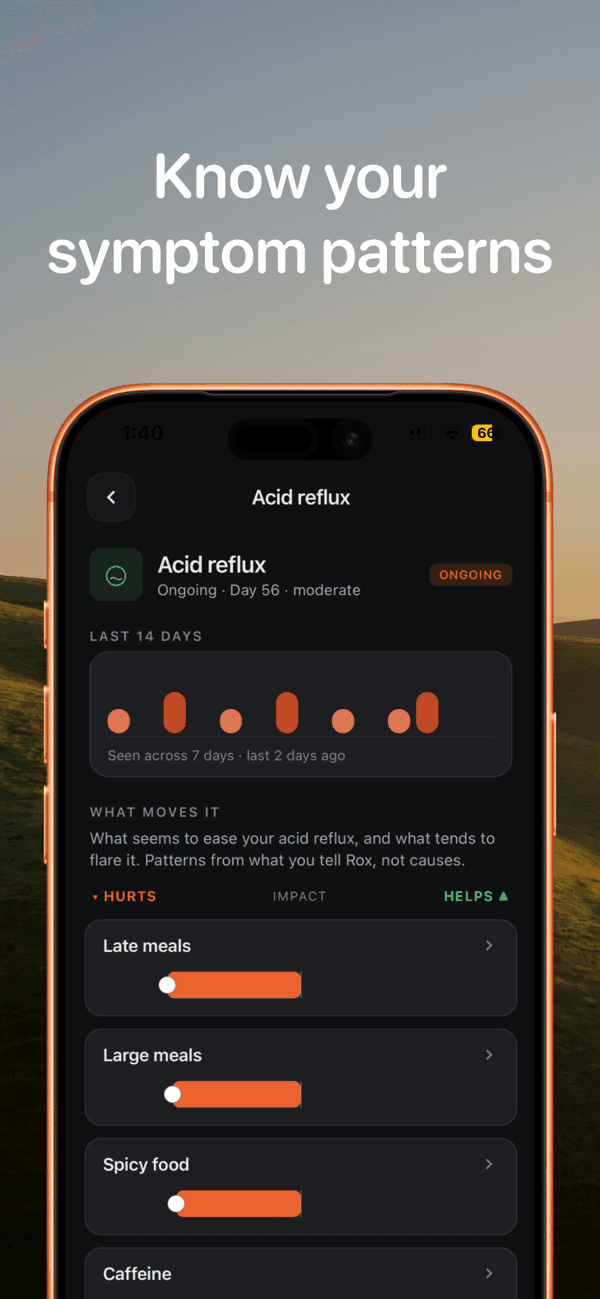
Rox is a free tracker built for people whose perimenopause overlaps with fatigue-heavy conditions like POTS, ME/CFS, or fibromyalgia. It connects to the wearable you already own (Whoop, Oura, Apple Watch, or Garmin) and shows that data alongside your logs, and it surfaces the patterns from what you track. It also turns your history into a doctor-ready report. The logging, insights, and report are all free; only the AI features are paid. If your perimenopause is tangled up with other conditions, this is the one built for that. You can try Rox on the App Store.
Balance — best overall for menopause
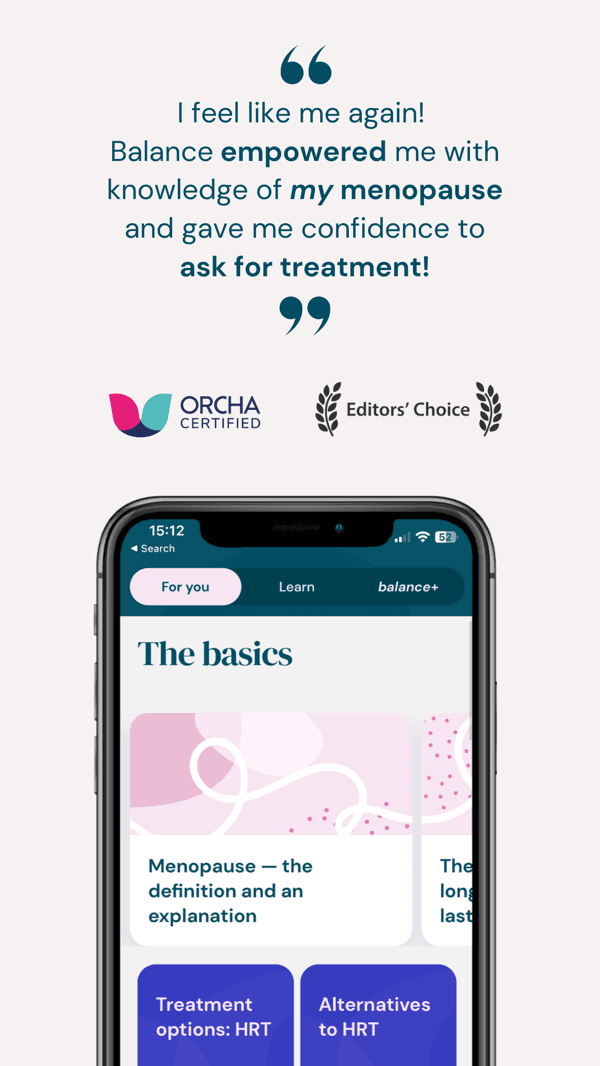
Balance, created by menopause specialist Dr Louise Newson, is the most established dedicated menopause app. It’s an Apple Editors’ Choice winner, certified by ORCHA (the health-app assessment body), and free. It covers symptom and period tracking, a health report for appointments, evidence-based expert articles, and a community. If you want a trusted, menopause-specific tracker to start with, this is the safe pick.
Health & Her — best free toolkit

Health & Her is a free hormone-health app that pairs symptom tracking with a toolkit of guided exercises: interactive CBT, pelvic floor training, meditations, and hydration reminders. It’s a good fit if you want practical daily support alongside your tracking, not just a log.
Caria — best for evidence-based coaching
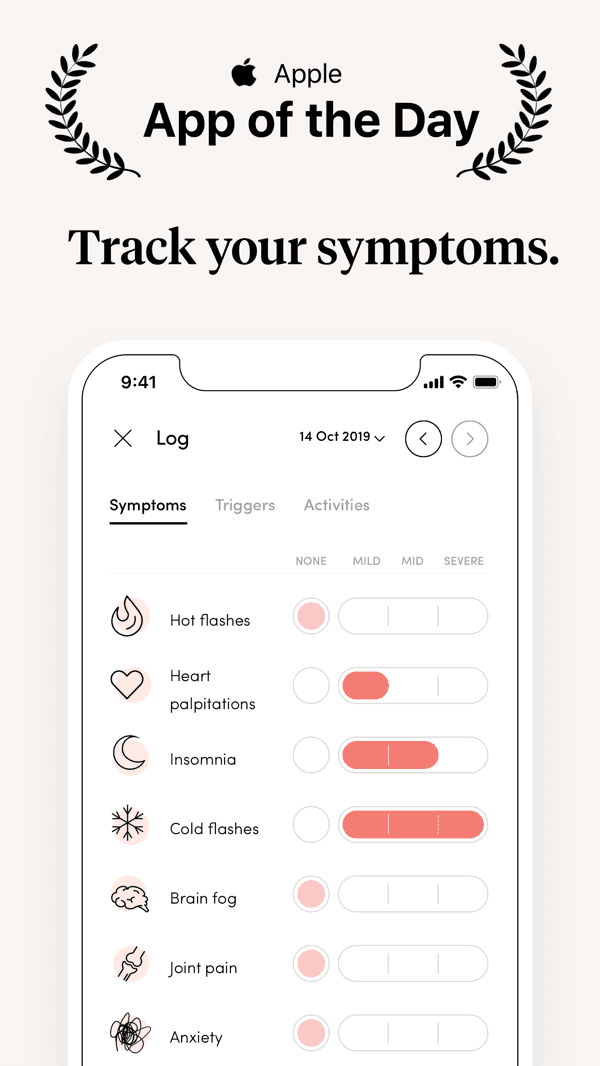
Caria focuses on reducing symptoms through structured, evidence-based programmes, including CBT for hot flushes and sleep, plus nutrition and mindfulness, and it has published clinical research. It offers a three-month free trial, then costs around $29.99 per quarter or $78 a year. Worth it if you want guided coaching rather than self-directed tracking.
Perry — best for community

Perry centers on community and peer support, with expert events and a space to talk with other women going through the same transition. It works well alongside a tracker when the isolation is the hardest part.
Which perimenopause app should you choose?
There’s no universal best, only the best for what you need:
Overlapping fatigue or chronic conditions, and wearable pacing: Rox
A trusted, free menopause tracker: Balance
Guided daily exercises: Health & Her
Structured CBT coaching: Caria
Community and peer support: Perry
Plenty of women use two together, usually a tracker plus either coaching or community. Rox’s own users most commonly pair symptom logging with a wearable they already own (Whoop, Oura, Apple Watch, or Garmin), then use the doctor report at appointments rather than trying to summarize months in five minutes. If fatigue is your main symptom, start with our guide to perimenopause fatigue. If the weight side is what’s bothering you most, see perimenopause weight gain.
Hormone-driven conditions rarely stay in one lane. If endometriosis is part of your picture too, an endometriosis app tracks pelvic pain against your cycle more closely than a menopause app will.
Frequently asked questions
What is the best free perimenopause app?
Balance is the best-known free option, created by a menopause specialist, with symptom tracking, a doctor report, and expert content at no cost. Health & Her is another strong free choice with a good toolkit of guided exercises.
Is there a perimenopause app that syncs with a smartwatch?
Yes. Rox connects to Whoop, Oura, Apple Watch, and Garmin to track how your symptoms and energy relate to your sleep and activity, which most menopause-specific apps don’t do. That objective data is useful if fatigue and energy crashes are a big part of your experience.
Do perimenopause apps actually help?
They can. Tracking symptoms over time helps you and your doctor see patterns, time treatment, and measure whether something is working. Apps with evidence-based programmes, like Caria, have published research on reducing symptoms.
Are perimenopause apps worth paying for?
Free apps like Balance and Health & Her cover tracking well and cost nothing. Paid apps like Caria add structured coaching and programmes. Paying is worth it if you want guided support rather than a place to log symptoms.
NHS and The Menopause Society (NAMS). Rox is a health companion, not a medical device, and this article is general information, not medical advice. Always consult a qualified healthcare professional about your symptoms.
Track it yourself: the free sleep tracker, symptom tracker and mood tracker all run in your browser with no sign-up, and your data stays on your device. See all chronic illness trackers.