Apps & Tools
Best Pacing Apps for Chronic Illness (2026)
The best pacing apps for chronic illness, ME/CFS, and Long COVID in 2026, compared honestly. Heart-rate-based tools, free options, and what pairs well with them.


Shivay Madan, Co-Founder & CMO at Rox
Updated
If you have ME/CFS, Long COVID, POTS, or any energy-limiting condition, pacing is the single biggest lever you have. Overdo it and you pay for a week. Do less than you can and life shrinks. The right app takes the guessing out.
A pacing app is a mobile tool that uses heart-rate and activity data to help you stay within your energy limits and avoid the post-exertional crashes that come with pushing past them. Here are the best for 2026, plus the trackers that pair well with them.
What to look for in a pacing app
Heart-rate-based data, not just self-reported effort
A daily “how much can I do today” signal
Rest and recovery guidance, not fitness or training language
Something built for people with illness, not athletes
The best pacing apps at a glance
Rox is made by our team; the rest of this comparison is independent research. Prices checked July 2026.
App | Best for | Cost |
|---|---|---|
Visible | The most complete pacing platform | Free tier + paid |
Welltory | HRV-based readiness scoring | Free tier + paid |
Bearable | Manual pacing alongside broad symptom tracking | Free tier + ~$35/yr |
Rox | Tracking symptoms and vitals alongside your pacing tool | Free (AI optional) |
Visible — best overall for pacing
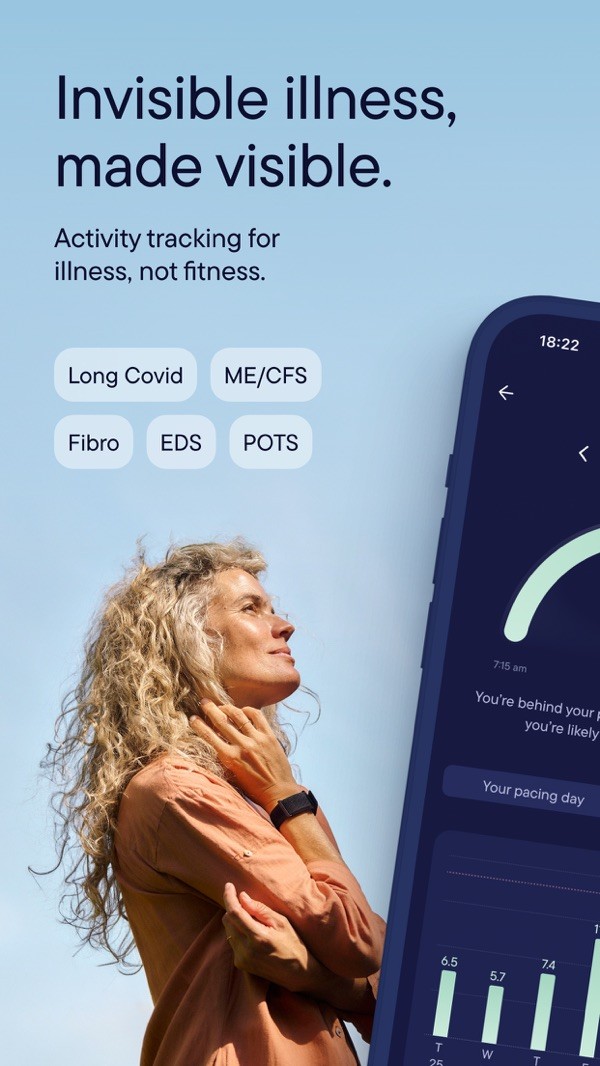
Visible is the most established pacing app, built specifically for ME/CFS, Long COVID, POTS, and fibromyalgia, with over 250,000 users. It measures heart-rate variability and resting heart rate every morning (through your phone camera or the Visible Band, a Polar-manufactured armband) and gives you a daily “stability score” that tells you how much you can safely do. It supports rest and pacing, not workouts. If pacing is your core problem, this is the specialized tool. Free tier plus a paid Plus subscription for the deeper features.
Welltory — best for HRV-based readiness

Welltory turns your Apple Watch, Oura, or other wearable data into a daily energy and stress readout, letting you see when your body is telling you to slow down. It isn’t purpose-built for chronic illness, but for people who already own a wearable and want a straightforward HRV-based readiness score, it works well. Free tier plus a paid subscription.
Bearable — best for manual pacing alongside symptom tracking

Bearable isn’t a pacing app in the Visible sense, but its custom factor tracking lets many people build a workable manual pacing system alongside logging mood, sleep, symptoms, and medications. Its deeper correlation insights sit behind Bearable Premium (~$35/year). A solid choice if you want everything in one app and don’t need heart-rate-based automation.
Rox — best for spoon-based pacing alongside your symptom tracking
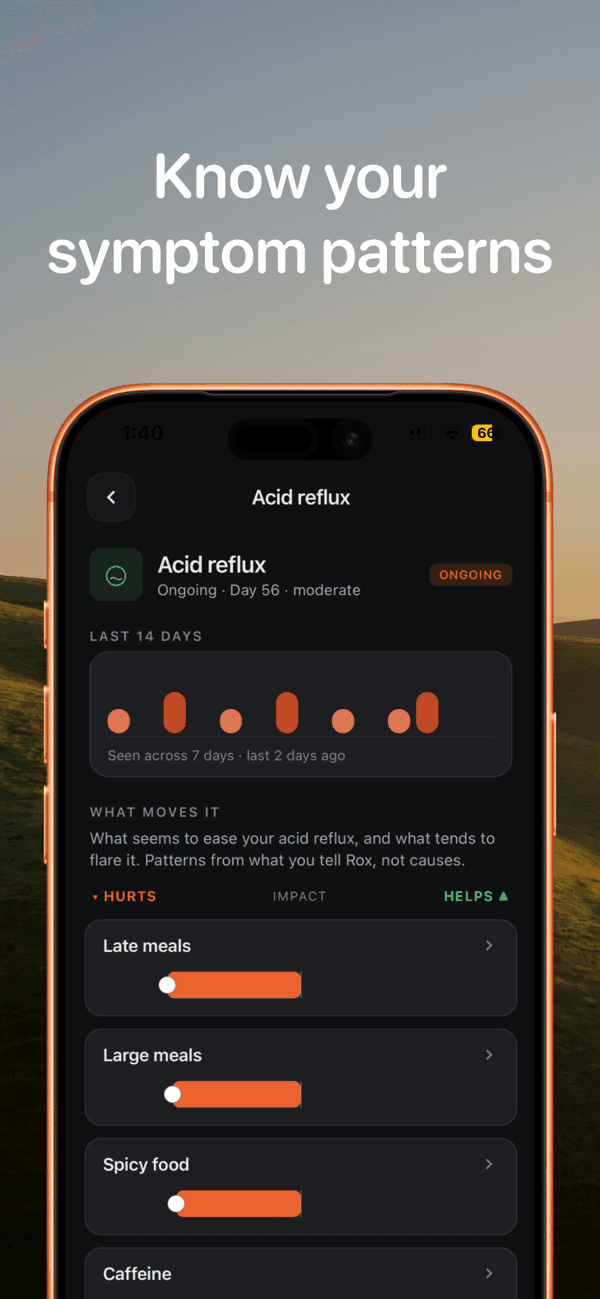
Honest positioning: Rox does spoon-based energy pacing, the manual kind where you budget your day against how much energy you actually have. What it does not do is wearable-driven pacing, so it won’t read your HRV each morning and hand you a number like Visible does. What it adds instead is the other half of the picture: capturing your symptoms, medications, hydration, and vitals so you can see what a pacing-only tool misses. You connect a Whoop, Oura, Apple Watch, or Garmin, log how you’re feeling, and Rox surfaces the patterns and turns it all into a doctor-ready report. Plenty of people run Rox alongside a dedicated wearable pacing app for a fuller view. The logging, insights, pacing, and report are free; only the AI features are paid. You can try Rox on the App Store.
Which pacing app should you choose?
The most complete pacing platform: Visible
HRV readiness from a wearable you already own: Welltory
Manual pacing plus broad symptom tracking: Bearable
The symptom side of the picture, alongside a pacing tool: Rox
Plenty of people use two together. Visible for the pacing signal, plus a symptom tracker to see what’s actually happening around the crashes.
Frequently asked questions
What is the best free pacing app?
Visible has a free tier that covers the core pacing experience, and it’s the most-used option in this space. Rox is free for the tracking side of things (symptoms, medications, vitals, insights, doctor report).
Do I need a wearable to use a pacing app?
It helps a lot. Visible works without one via the phone camera, but its Band or an Apple Watch make daily readings easier. Welltory needs a wearable. Rox connects to Whoop, Oura, Apple Watch, or Garmin.
Can I pace without an app?
Yes. Pacing at its core is knowing your energy envelope and staying inside it. Apps make the numbers easier to see and share, but journaling by hand works too.
Are pacing apps only for ME/CFS and Long COVID?
No. Pacing helps anyone with a fatigue-heavy condition: POTS, fibromyalgia, MS, or long-term perimenopause fatigue.
Track it yourself: the free fatigue tracker, symptom tracker and flare tracker all run in your browser with no sign-up, and your data stays on your device. See all chronic illness trackers.