Apps & Tools
Best Apps for POTS Syndrome (2026)
The best apps for POTS in 2026, compared. Symptom trackers, heart-rate-based tools, and free insights, with honest picks for what each does best.


Shivay Madan, Co-Founder & CMO at Rox
Updated
If you’re managing POTS, you already know how much information you have to hold in your head: heart rate on standing, salt and fluid intake, medications, sleep, hormones, weather, and the dozen other things that seem to nudge a flare. The right app takes some of that off your plate. The wrong one adds another daily chore.
A POTS app is a mobile tool that helps you track the symptoms and vital signs that matter for postural orthostatic tachycardia syndrome (heart rate on standing, hydration, salt, medications, and daily factors) so you can spot patterns and share them with your doctor. Here are the best for 2026.
What to look for in a POTS app
Heart rate and orthostatic tracking, so standing changes actually get captured
Symptom, medication, and hydration logging in one place
Free insights, so understanding your own data isn’t a paid feature
A doctor-ready report for your cardiologist or POTS specialist
Wearable integration if you already own an Apple Watch, Oura, or Garmin
The best POTS apps at a glance
Rox is made by our team; the rest of this comparison is independent research. Prices checked July 2026.
App | Best for | Wearable data | Cost |
|---|---|---|---|
Rox | Complex, overlapping conditions | Yes (Apple Watch, Oura, Garmin) | Free (AI optional) |
POTS Tracker | Purpose-built orthostatic tracking | Manual + integrations | Free tier |
TachyMon | Live heart-rate alerts to prevent fainting | Apple Watch | Free tier + paid |
Guava | Complex, hard-to-diagnose conditions | Yes | Free tier |
Visible | Pacing for post-exertional crashes | Yes | Free tier + paid |
Bearable | Customizable daily symptom tracking | Some import | Free tier + ~$35/yr |
Rox — best for complex, overlapping conditions
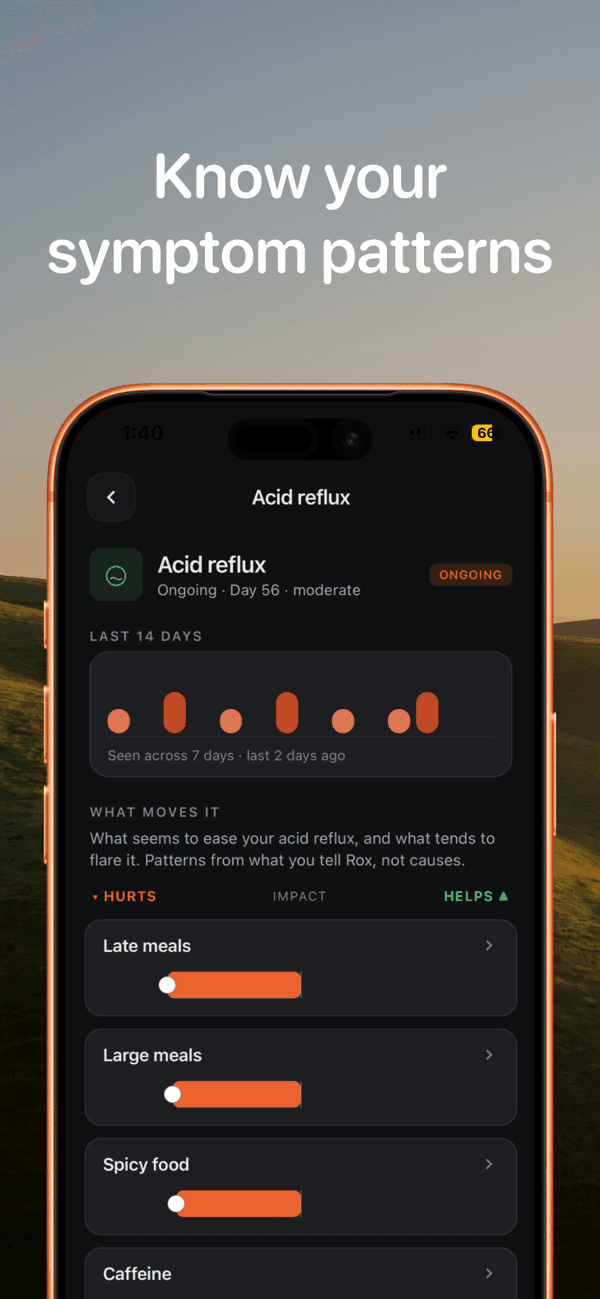
Rox is a free companion built for people whose POTS overlaps with other things, whether that’s ME/CFS, perimenopause, endometriosis, or a mental-health condition. You log symptoms, medications, hydration, and vitals, connect an Whoop, Oura, Apple Watch, or Garmin to see that data alongside your logs, and Rox surfaces the patterns from what you record. It also turns your history into a doctor-ready report you can bring to your cardiologist or POTS specialist. Logging, insights, and the report are all free; only the AI features are paid. You can try Rox on the App Store.
POTS Tracker — best for purpose-built orthostatic tracking
POTS Tracker is a purpose-built tool for people with POTS and other forms of dysautonomia. It focuses on orthostatic heart rate, presyncope episodes, and connections between body position, salt, and heart rate, and it lets you share symptom reports with your care team in one tap.
TachyMon — best for live heart-rate alerts
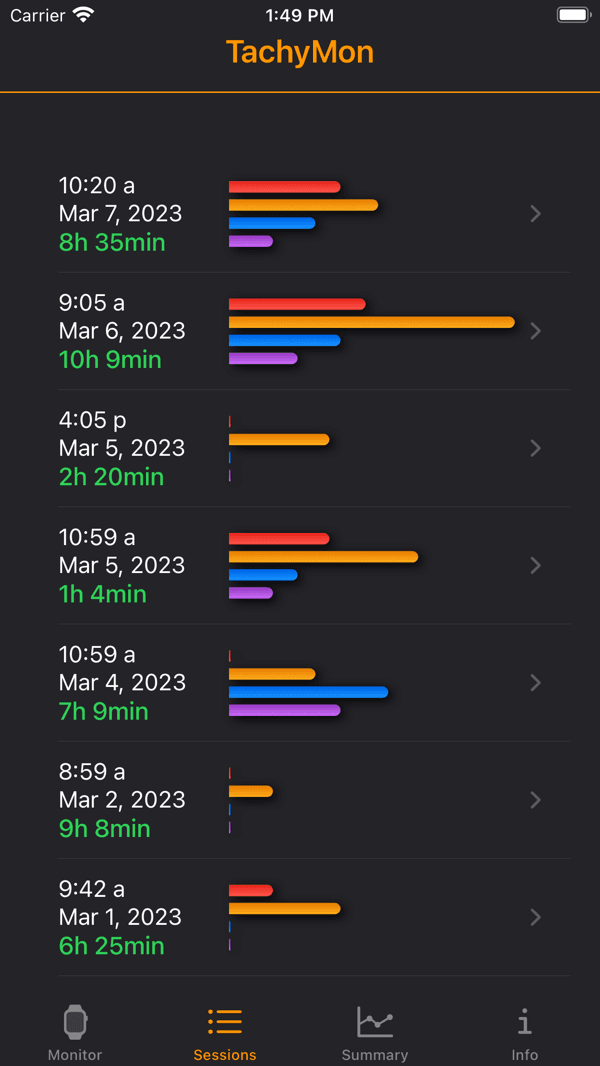
TachyMon uses your Apple Watch to alert you when your heart rate is climbing, so you can sit or crouch before you get close to fainting. It stores workout information in Apple Health and pairs well with the wider POTS toolkit. Worth it if in-the-moment prevention is the missing piece for you.
Guava — best for complex, hard-to-diagnose conditions
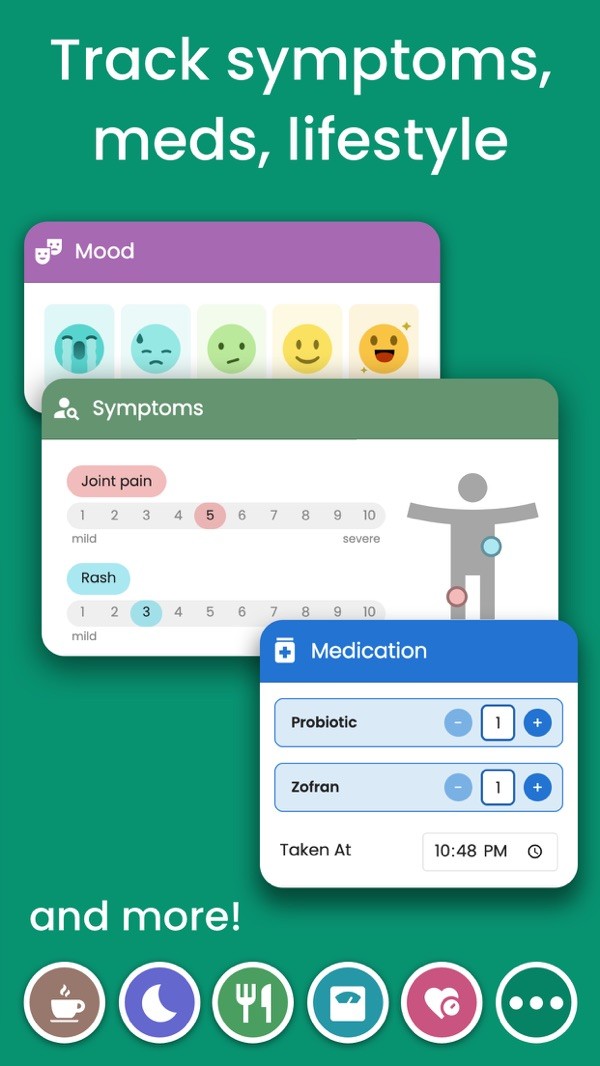
Guava is a comprehensive health tracker built for complicated cases, including POTS, EDS, MCAS, ME/CFS, and Long COVID. It syncs with health devices to collect heart-rate data automatically, brings symptoms, pain, medications, and vitals into one place, and helps you spot patterns to share with your care team.
Visible — best for pacing post-exertional crashes
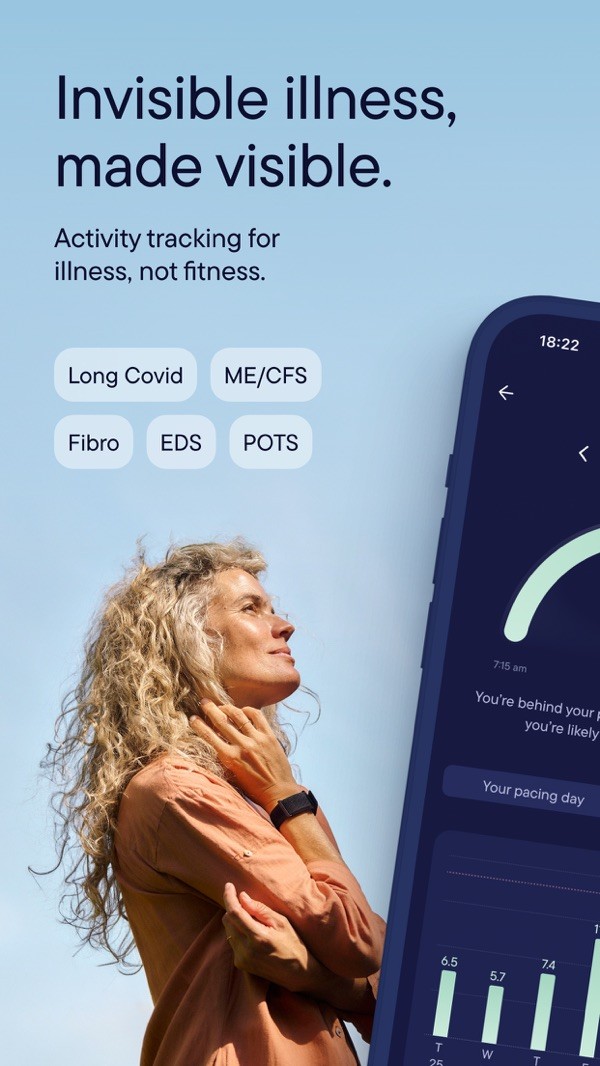
Visible focuses on pacing for energy-limiting conditions like ME/CFS and Long COVID, using heart-rate data to help you stay within your limits. Many people with POTS also deal with post-exertional crashes, and Visible’s deeper pacing features (paid tier) are the most specialized option for that specific problem.
Bearable — best for customizable daily tracking

Bearable is a flexible symptom tracker covering mood, energy, sleep, symptoms, medications, and custom factors, with a generous free logging tier. Its deeper correlation insights require Bearable Premium (around $35 a year).
Which POTS app should you choose?
Overlapping conditions and free insights: Rox
A purpose-built POTS-specific tool: POTS Tracker
Live alerts to prevent fainting: TachyMon
A comprehensive tracker for a complicated case: Guava
Pacing to prevent post-exertional crashes: Visible
A highly customizable daily tracker: Bearable
Plenty of people with POTS use two together, usually a general tracker plus a heart-rate or pacing tool. For day-to-day management, see our guide to living with POTS, or if you’re trying to understand what’s setting off your flares, POTS flare-ups.
Autoimmune conditions sit alongside POTS for a lot of people. If lupus is one of yours, a dedicated lupus app may fit the flare pattern better than a POTS-only tracker.
Frequently asked questions
What is the best free POTS app?
Rox offers free symptom, medication, and vitals logging, free insights, and a free doctor report, and is built for overlapping conditions. Guava is another strong free-to-start option.
Is there a POTS app that connects to my Apple Watch?
Yes. Rox connects to Whoop, Oura, Apple Watch, and Garmin and shows that data alongside your logs. TachyMon uses your Apple Watch for live heart-rate alerts.
Do POTS apps replace a doctor?
No. They help you and your doctor see patterns and time treatment, but a POTS diagnosis and management plan should always come from a clinician familiar with dysautonomia.
Are POTS apps worth paying for?
Free apps like Rox, Guava, and POTS Tracker cover the core of what most people need. Paid features are worth it if that specific piece is what’s missing.
Track it yourself: the free symptom tracker, trigger tracker and fatigue tracker all run in your browser with no sign-up, and your data stays on your device. See all chronic illness trackers.